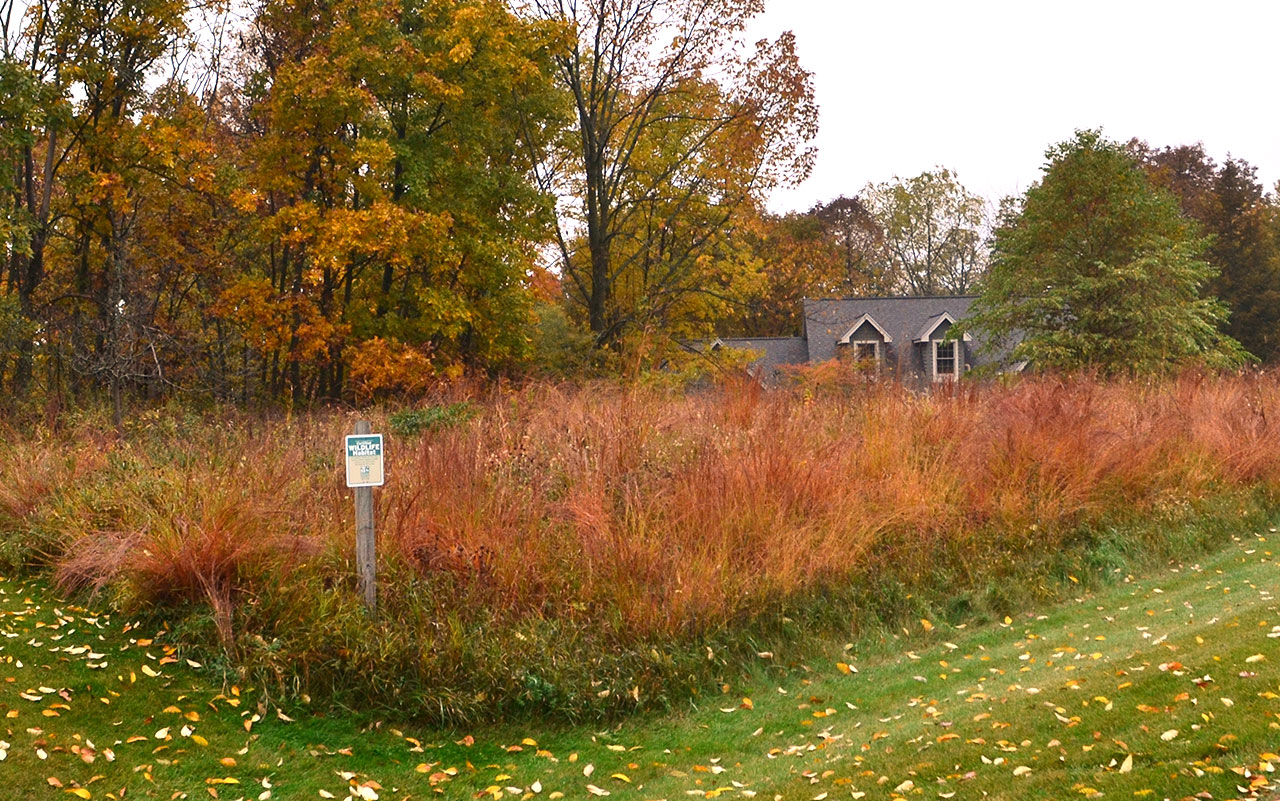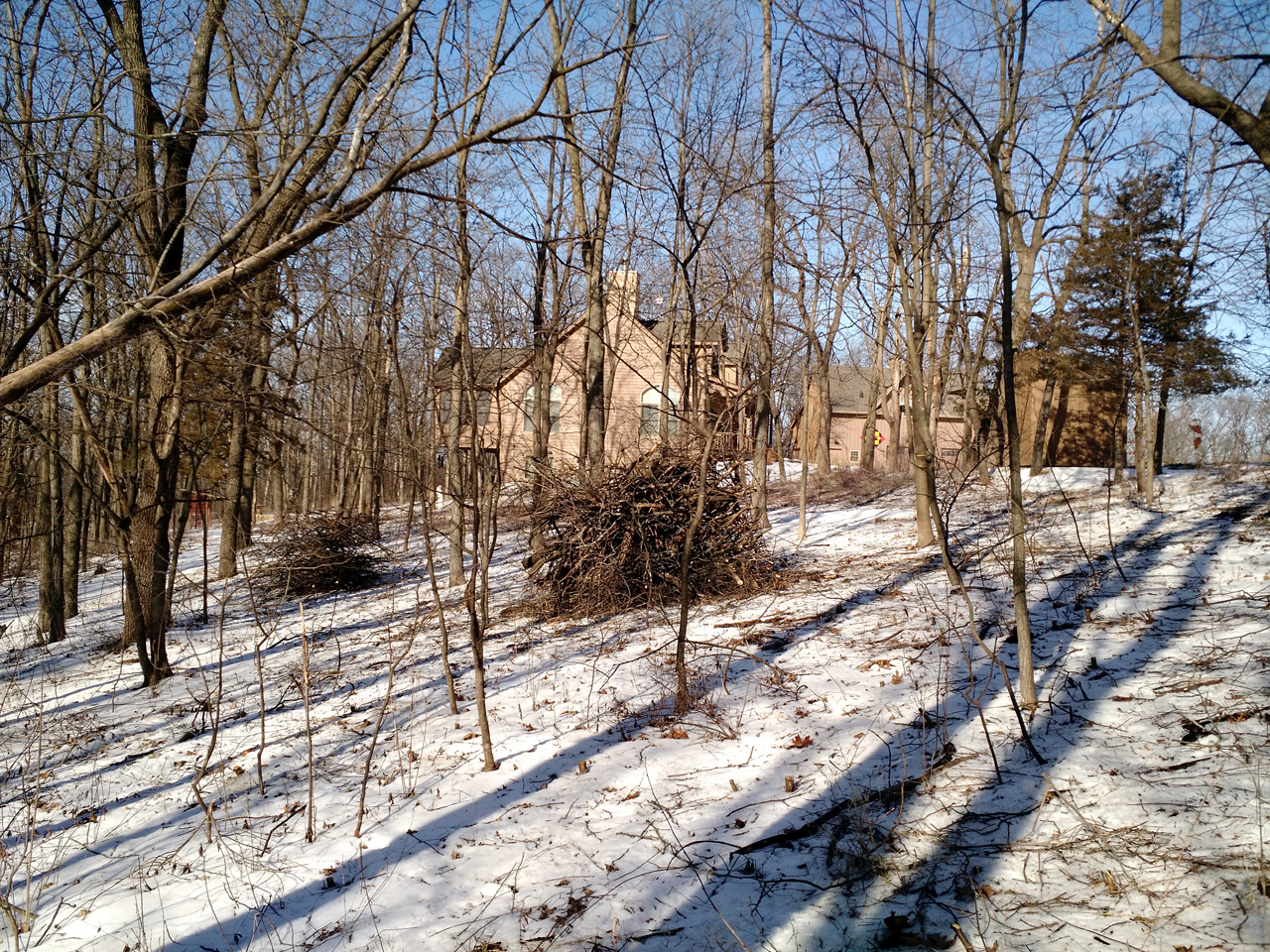
Prairie Works is the source for ecological and landscape services in Northwest Illinois. Prairie Works can assist on projects large and small ranging from prairie and woodland restoration, invasive species control, controlled burning, bio-engineered erosion control and landscaping through the use of native plants. Prairie Works offers an environmentally friendly and dynamic solution to traditional land use practices and strives to connect people to the natural history of the area.
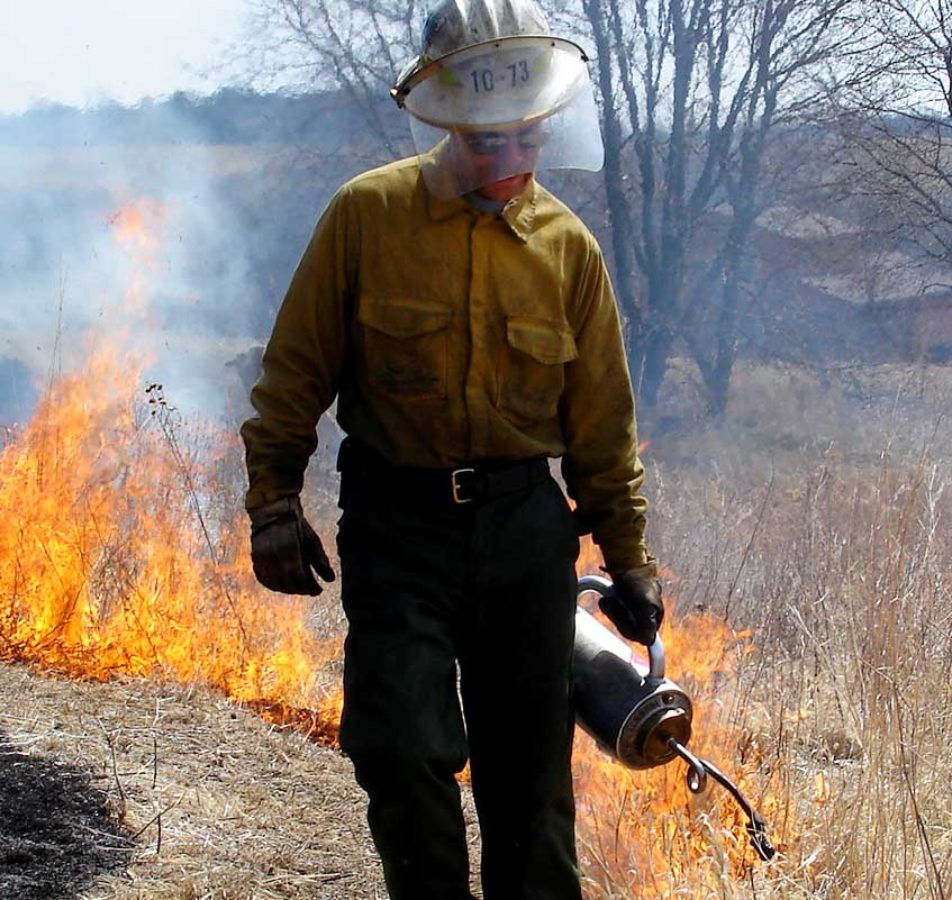
Cory's Blog: A cyber bulletin containing information, inside dope, statements, news, reports, observations and ramblings. Please browse the archives at you leisure.

ArchivePage 2 of 6

The 70’s

APRIL 18 - Last Wednesday’s high of 74 marked the first time since October 21st that we have experienced 70 degrees or higher. That is a 178 day stretch. It was the latest 70+ reading in 15 years and 35 days past normal. The latest ever was on May 6, 1961.

Invasive Species in WI Legislation

The Lovely Dames Rocket Gracing Stagecoach Rd. with it’s PresenceThe state of Wisconsin has long been a leader in the protection of natural areas. Their forward-thinking approach towards nature began 100 years ago and is still strong today. It makes great sense since their 12.8 billion dollar tourism industry relies on it and hunting and fishing is steeped in tradition there. Last week the Wisconsin State Journal had a cover story about a major push to stop new waves of invasive plants in the future. A new bill to reach the Capitol floor will give the state the power to fine individuals for selling, transporting or spreading a long list of invasive species ranging from Parrots to Maple trees. This is a major step in the right direction.

In recent decades invasive plants have increased by 1,300% and are costing taxpayers billions of dollars annually. To blame are short-minded individuals and corporations who have introduced plants, insects or fish for financial gain or for personal interest. There has always been a grey area on how to handle the issue and the exact introducer has been difficult to pin point (except when our federal government takes the blame). The new proposed rules establish a consistent classification and regulatory system for all listed invasive species. The rules will set specific restrictions on actions such as selling, transporting and planting or releasing certain species to the wild. It will allow the WDNR to work with local units of government and landowners to quickly contain new infestations of species likely to become problematic.

The list of species is broken into 5 categories: Terrestrial plants, aquatic plants, vertebrates, micro-organisms and aquatic invertebrates. In total, 187 species are on the potential list. Most already occur in Wisconsin but some are being included to be proactive, as with Emerald Ash Borer. Most interesting was seeing Dames Rocket (Hesperis matronalis) included on the list. The famed beauty from the Meadow in a Can seed mixes sold at garden centers everywhere shows itself along the countryside of Northwest Illinois each May. Can I start issuing tickets?

It will be interesting to watch this bill transpire into law and, even more, how aggressively it will be enforced. I know the nursery trade may be scrambling to adjust profit margins as Tree of Heaven (Ailanthus altissima), Blackberry Lily (Belamcanda chinensis) and other perennial favorites are on the list. Stay tuned for more on this aggressive bill.

http://dnr.wi.gov/invasives/classification/ The Skinny from WDNR

http://www.madison.com/wsj/topstories/280782 The Wisconsin Sate Journal Article

Rainy April

APRIL 10 - 4.2 inches of rain has fallen this month. This week could see another 3 inches along with some more snow. 3.54 inches is the April average. 

Ephemeral Ponds

Ephemeral - Existing only briefly

Ephemeral Pond in MarchSpring is a great (and the only) time of year to view epehemeral ponds that lay scattered in our woodlands. Ephemeral ponds, sometimes called vernal pools, are a small but important ecosystem as they harbor many different amphibians, birds and plants. They increase the local biodiversity greatly when present and are a dynamic part of woodland ecosystems.

These ponds are depressions with obstructed drainage that hold water for a short period of time following snowmelt and spring rains but typically dry out by mid-summer. Common plants of these habitats include: Yellow water crowfoot (Ranunculus flabellaris), bluejoint grass (Calamagrostis canadensis), fowl manna grass (Glyceria striata), spotted cowbane (Cicuta maculata), smartweeds (Polygonum spp.), orange jewelweed (Impatiens capensis), and sedges (Carex spp.). During their existence these plants provide critical breeding habitat for many amphibians such as frogs and salamanders.

Ephemeral ponds also provide feeding, resting and breeding habitat for songbirds and a source of food and water for many mammals. They contribute to the biodiversity of a woodland in many ways. Ephemeral ponds fit into an eco-community context by the following attributes: their placement in woodlands, isolation, small size, hydrology and length of time they hold water. Trees adjacent to ephemeral ponds provide a variety of benefits such as maintaining cool water temperatures, preventing premature drying, and adding organic matter each fall. The annual input of leaves from trees around the pool support a detritus-based food web and a support a variety of invertebrates that are part of the food web.

Here, in the Driftless Area, ephemeral ponds are not as common as they are in flatter regions and are usually found in floodplains where the land is not sloped. I have noticed that old mining holes can behave similar to an ephemeral pond, but cannot hold water for very long. These little depressions are fun to watch over the year and should be enjoyed by any birder, animal lover or plant observer. 

http://watermonitoring.uwex.edu/level3/WIephemeral.htm SE Wisconsin’s Ephemeral Pond Project

http://www.vernalpool.org/ Great Learning Resource (get a t-shirt)

http://www.epa.gov/r5water/ephemeralwetlands/ The E.P.A.’s information

Winter of 2007-08

Making humour outside of Dubuque, IAOn September 15th 2007, Dubuque, IA recorded its earliest frost ever. Was this a sign of things to come? Today, winter is slowly coming to an end and we have historic winter weather statistics to report. Many cities and counties set record snowfall amounts here in the upper Midwest. We are also reporting colder than average temperatures and had lots of miscellaneous precipitation. This put a stress on road crews that was unbearable at times. Many school districts in the area have lengthened the school day in order to make up for the many “snow days” and munincipalities are scrambling to adjust budgets that were over-consumed by snow removal and salt costs.

Blizzard Conditions on Dec. 23rdIt all started on November 21st when we received 2.2 inches of the white stuff. We did not realize how well acquainted we would become… December gave us a plethora of rain, snow, ice and fog. We ended the month with 20.6 inches of snow and a record setting amount of rain (4.61 inches). We also had two vicious ice storms and 11 days of visibility of a quarter mile or less. We thought that winter came on strong but would fade out early. January was relatively easy when compared to its bookends. We received only 13.2 inches of snow but experienced a cold snap the last week of the month where nearby Waterloo, IA, fell to -29 below (January 23rd).

February 2008 was a month with many staggering weather statistics. Dubuque, IA, racked up a record amount of 32.5 inches of snow which fell on 80 percent of the days possible. This included an Ash Wednesday snowstorm that dropped 18″ of snow in JoDaviess County. A week long stretch of sub-zero temps followed. It became the 2nd wettest February in Chicago history. Madison, WI, broke its all time snow record very early in the month when winter was a mere 6 weeks old! The national guard was called out to Interstate 90 south of Madison on the 5th to help stranded motorists - the first time that’s happened in the Midwest since the famous Chicago blizzard of 1967. Famed Chicago weatherman, Tom Skilling, was creating stats about the month never heard before. Skilling said of February, “Sunshine in February was 40 percent of possible versus normal of 46 percent”? Whatever exactly happened, it was extremely cloudy, cold and snowy.

White EasterWe entered March with our local snowfall records in sight. Snow amounts were recorded sporadically and in small amounts. Lent ended in Chicago like it began, with a snowstorm. A Good Friday storm brought 7 inches of snow, setting the all time record for McHenry County, Illinois (77 inches). With that storm Chicago surpassed its 60 inch total and Madison, WI surpassed the 100 inch milestone. It was the first “White Easter” in 30 years for many areas. The Galena area had to wait until March 27th to break our all time record. This was set at the Dubuque Airport Thursday, March 27th at 7:30 P.M. with a wet and short-lived 4.4 incher.

Madison, WI - The most amazing statistic was brought to us by Madison, WI.

Weather records seem to be like records set in athletic realms, they are barely broken, just extending past. Records are made by small measurements, split seconds or a degree or two. A maximum threshold seems to always exist. This was not the case with Madison’s snowfall record. It shattered its previous record of 76.1 inches by over two feet (24.6 inches). Snow has been sitting on the ground there every day since December 2nd (another record broken). Many Chicagoans remember the infamous winters of the late 1970s. The record setting season for Chicago snowfall in 1978-1979 was 89.7 inches.

CanoeSledWith all the numbers attempting to explain the story, these statistics cannot convey the ice, sleet combined with snow (sneet), extremely dense fog, thunder snow, blowing winds and the relentless 3 inch snow events that we absorbed this winter. I was provided with many memorable driving experiences like my drive on December 23rd from Platteville to Galena that left fingerprints that are forever embedded into the steering wheel of our Volkswagen Passat. Also, my annual Easter weekend canoe trip was done with the sounds of snowplows in the distance. Not to be forgotten.

Cory alongside Cty. OWith that being said I thought I may add: The largest snowfall in JoDaviess County history occurred in April and the latest snow to ever fall in Chicago was on June 10, 1910…

Snowiest Winters for Dubuque, IA

  1. 76.2″…2007-08 (34.4 inches greater than normal)
  2. 75.7″…1961-62
  3. 75.0″…1974-75
  4. 71.5″…1959-60
  5. 71.3…1977-78
  6. 70.4″…1978-79
  7. 65.9″…1958-59
  8. 63.8″…1992-93
  9. 59.8″…1985-86
  10. 59.3″…1950-51

Official Snow Totals From Around The Region (as of April 1st)

Cedar Rapids, IA     59.9″    Normal   27.7″ (2nd Snowiest Ever)
Chicago (O’Hare)     60.3″    Normal   36.4″ (7th Snowiest Ever)
Chicago (Midway)   60.7″    Normal   42.9″ (7th Snowiest Ever)
Dubuque, IA            76.2″    Normal   42.0″ (Record Set)
Madison, WI            100.7″  Normal   46.3″ (Record Set)
Milwaukee, WI        98.9″   Normal   49.7″ (2nd Snowiest Ever)
Moline, IL                51.5″    Normal   33.7″ (2nd Snowiest Ever)
Rockford, IL            72.9″    Normal   37.3″ (2nd Snowiest Ever)

http://blogs.trb.com/news/weather/weblog/wgnweather/ Tom Skilling’s Blog

http://www.weather.gov/ Official Weather Recordings

Record Broken

MAR 28 - Yesterday 4.4 inches of snow fell at the official recording station at Dubuque, IA. This pushed our season snowfall total to 76.2 inches, breaking the all-time record of 75.7 inches set in 1962. Since November 21, snow has fallen on 40 different days this winter.

History of Fire in America

With the 2008 spring burn season now on the horizon this is a good time to get our arms around the monster that is prescribed fire. Prescribed fire (RxFire) or controlled burning is a process that comes up often on this website but has never had a post devoted entirely to it. It is the restoration ecologist’s number one tool for natural areas restoration. But, it can be easy to forget why natural areas require it.

‘Fire Fight Fire’Fire was a common sight in America for millions of years before european settlement. From the eastern seaboard to the forests of the west, our country was frequently “on fire.” It was just as much as part of nature’s cycle as the dropping of leaves in fall. Some areas burned every 50 to 100 years and some areas burned twice annually, but nowhere burned as frequently as the Midwest (with the exception of Florida). Due to the high flammability of oak leaves and prairie grasses, our Midwest ecosytems burned quickly and often. Naturally, lightning strikes caused ignition, but the Native Americans utilized fire for many purposes for thousands of years and are responsible for retaining the prairie, a man-sustained ecosystem.

Indians burned prairies for many reasons, including hunting, to ease travel, stimulate flowering, communication, keep lookout points open, celebration and warfare. It is safe for me to assume that Indians wouldn’t hesitate to burn for the stunning beauty of a vast nighttime burn too. These fires raced across the landscape and could travel hundreds of miles in a day, traversing through woodlands, wetlands, ridges and ravines. The fire was not choosey on what it was going to burn; only large rivers would stop them. One report from the 1840s claims that a fire which started in Peoria, IL, reached Rockford (Rocky Ford) in just two hours!

Prairie Fire by Currier & IvesAfter the Blackhawk war and the exiting of the Indians, fire intervals were reduced but were not entirely eliminated. Fires from camps often escaped, lightning generated fires continued and locomotives began starting fires as they pushed through the prairies. Soon, agriculture would dominate and wildfires became isolated. The wildfires that were feared by pioneers and homesteaders were still fresh in peoples’ minds and were feared. Our ecosytems began to change at this time as fire retardant agricultural crops were preferred. Throughout the 20th century railroad rights of way were maintained with fire by railroad companies to reduce brush. This is why so many ‘railroad prairies’ exist today.  

The first people to duplicate wildfire as a tool for restoring natural areas is debated, but it was most likely Aldo Leopold or some of the University of Wisconsin professors working on Curtis Prairie in the 1940s. This was a good start, but soon after Smokey the Bear was born…

“Weakens America but Stregthens Ecosystems”Smokey the Bear is the longest running public service campaign in the United States. A highly successful campaign, it reached out to all Americans and taught them that fire was bad. This public relations stint cancelled all headway to utilize RxFire as a land management tool until the 1970s, although Smokey remains a barrier today.

As our remnant ecosystems became fire intolerant and those remaining were succombing to invasive species, the 1970s and ’80s saw increased use and research of RxFire. In the Midwest prairie preservationists were becoming arsonists, and some of the leading scientists were screaming for reform on the current federal wildfire procedures. The blessing in disguise came in 1988, with the wildfires at Yellowstone National Park. Initially, these fires were reported as destructive and Time called it an “American Tragedy.” In the years following the fire the ecological response was very positive and soon the reputation of wildfires changed to the positive.

Cory Managing RxFireSince the early 1990s RxFire started becoming widely accepted among conservationists, especially in the Midwest. Since the upswing began, the study of fire effects on specific ecosystems and its harboring species has been a very interesting discipline. We are still learning a lot about fire effects on plants, insects and animals. However, the results have been conclusive. Because this is an ecosystem where fire occured frequently, the concensus has become: We need more of it if we want our native species to persist and thrive.

After millions of years living with fire, our native species became tolerant and sometimes dependant on fire. We are now hearing many interesting theories and research findings. For instance: Some say our mammals and amphibians gained claws in order to dig holes quickly to create shelter from fires. A study published last year showed that certain prairie seeds require smoke contact in order to germinate. Oak trees will germinate at higher rates when woodlands are burned. We are also learning about using fire to control health issues such as Lyme Disease.

With all of that said, I must note that ecologists are also realizing that too much fire can be detrimental and that different burning techniques and varied timing can offer greater results. For that reason a burn prescription should be conducted by an experienced ecologist that can quantify all of the factors and is aware of the goals for a site. Of course, the safety issues surrounding a prescribed fire are ones that should never be taken lightly either.  

As my longest blog to date, it still cannot provide all of the information that surrounds this huge topic. I hope to provide smaller, more detailed posts in the future. In the meantime, when you see controlled burns being conducted this spring, remember that you are seeing the world’s oldest and most effective form of land management.

Liberty Hyde Bailey

Liberty Hyde BaileyToday, March 15, marks the 150th anniversary of the birth of Liberty Hyde Bailey. Liberty Hyde Bailey was an American botanist, author and poet who wrote hundreds of books and scientific papers over a very long professional career. He coined the word ‘cultivar’, helped establish the 4-H program for kids, created agricultural extension offices, rural electrification, parcel posts, and is considered the father of rural sociology. President Theodore Roosevelt, appointed him to head The Commission on Country Life in 1908  for “the working out of the desire to make rural civilization as effective and satisfying as other civilization. ”

Liberty was born in South Haven, Michigan in 1858. He was educated at Michigan Agricultural College (now Michigan State) where he graduated in 1882. He went on to work for the famous botanist Asa Gray at Harvard University and was the Dean of Agricultural Sciences at Cornell University until he retired.  

Most of his work was produced after his retirement. From 1923 - 1953 he published hundreds of papers and books. He became a specialist in the systematics of plants, mainly Cyad (palms) and Rubus (blackberries). He also published revisions of Vitis (grapes), Brassica (cabbages and kales), Cucurbita (pumpkins and squashes), Hosta (plantain-lilies), and monographs on Dianthus, Delphinium, Campanula, and the gourds. He published over 100 papers on pure taxonomy. His writing skills so impressed George P. Brett, president of Macmillan and Co., that he told Bailey to send along the title whenever he had a book under way because Macmillan would publish anything he wrote. The books sold well; from his first book, The Horticulturist’s Rule Book, published in 1885, to his last, The Garden of Bellflowers, in 1953, almost one million copies sold.

From 1890 to 1940, Bailey edited 117 titles by 99 authors from all over the country, covering subjects in agronomy, rural economics, botany, pomology, animal husbandry, dairy issues, soils and fertilizers, plant pathology, commercial floriculture, and home economics. He edited the popular monthly magazine, American Garden, from 1890 to 1892, and Country Life in America, from 1901 to 1903. He originated many series of books, including Rural Life, Garden Craft, Open Country, Rural Science, Rural Text-Book, and Rural Manual. He published at least 1,300 articles in total.

Quite a body of work. He also encouraged women’s education in America, helping colleges turn co-ed. Because of his accomplishments, a number of buildings at Michigan State and Cornell University have been named for him. The Bailey Scholars Program which emphasizes trans-disciplinary learning for undergrads, designed to develop ”the whole person,” was initiated at Michigan State in 1998.

Liberty died on Christmas day, 1954 at the age of 97. Today, he is not very well known, but his influence is widespread. On the 150th anniversary of his birth, Liberty Hyde Bailey is very worthy of attention and recognition.

http://web.extension.uiuc.edu/state/whatwedo.html Illinois Extension Office

http://rmc.library.cornell.edu/bailey/cornellu/index.html A great interactive museum

http://lhbm.south-haven.com/ The LHB Museum

Current Snow Depth

MAR 11 - The Current Snow Depth

Current Snow Depths for March, 11

Snow Update

MAR 6 - We received 1.3 inches of snow yesterday. That brings a season total to 71.4 inches. We are now only 4.3 inches away from the all time record.

Skunk Cabbage

Sympplocarpus foetidusThis is the time of year when we get to witness one of the true gems of native plant dynamics. Skunk Cabbage (Symplocarpus foetidus) is found in wet woodlands, shaded streambanks, springs and on the edges of fens. It is the first flower to begin growing in late winter, creates a horrible odor and has great medicinal value. However, Skunk Cabbage is best known for its thermogenetic properties - it produces its own heat!

Beginning as early as late February Skunk Cabbage begins to appear, sometimes coming up through the snow and melting it in the process. It produces a foul odor (hence the common name) as it grows, attracting stoneflies and bees. These insects serve as its pollinators and are responsible for its reproduction. Breaking a portion of the leaf will give someone a deep whiff of the skunk-like smell. This odor also discourages herbivores from eating it, thus increasing its survival rate.

Skunk Cabbage Melting SnowSkunk Cabbage can create temperatures up to 35° C (95° Fahrenheit) by a process known as cyanide resistant cellular respiration. It is among a small group of plants that exhibit thermogenesis. This produced heat also helps spread its odor into the air. Simply put, Skunk Cabbage is warm blooded, like us.

Another rare trait - Skunk Cabbage has contractile roots. This pulls the plant down into the mud as it grows. The plant actually grows downward, although it attains a height of up to 18 inches. This makes the plant impossible to be dug from the ground, something the nursery trade learned long ago.

Skunk Cabbage is not rare but also not common. It can be found in most Northern Illinois counties but occurrence is sporadic elsewhere. In Wisconsin it is found in most counties of the state. The specific habitat that it prefers makes it hard to find. Large populations of this plant can turn into tourist areas this time of year. It is well documented that Chicagoland once had extremely high populations of Skunk Cabbage.

Mimicking SaltI used to have a large population behind my house in Bull Valley near Woodstock, ILL. A friend once thought that a deer had broken up a salt lick and spread it around the woodland, melting the snow… If you have never experienced this phenomena it should be put on your ‘to do’ list.

http://chicagowildernessmag.org/issues/spring1999/skunkcabbage.html Good Article

Snow Update

FEB 26 - 4.1 inches of greasy snow fell yesterday and this morning. This was accompanied by .60 inches of rain. The season total now stands at 66.4 inches. The record from 1961-1962 is 75.7 inches. With 22% of the seasons snow usually falling after this date, I think we have a shot at the record…