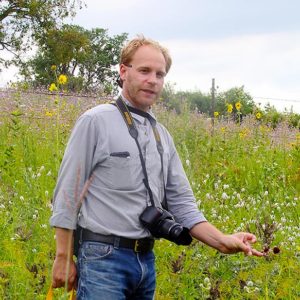
For the past year Platteville, WI photographer Mark Hirsch has been working on a very engaging project. His That Tree project has been successful enough to be covered by media outlets nation wide. It has been a multi-faceted success blending photography, nature and technology so well, it has gathered the attention of purists from all three fields.
Starting on March 24th, 2012 Mark has photographed a seemingly humble Oak tree everyday using an iPhone. Through the use of social media his project began to attract a loyal following and over the course of a year many have become reliant on his daily photo offering. Never identical, the year long photo journal shows pictures from many different perspectives and is a true testament to the photographers creativity.
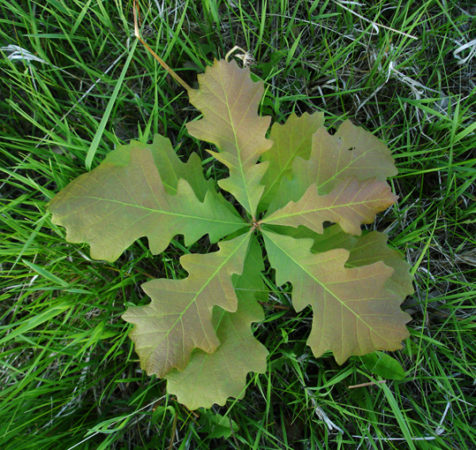
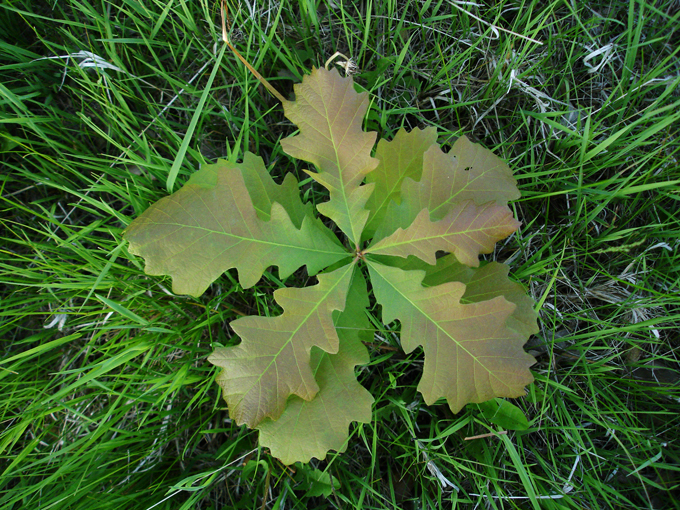
That Tree, which stands alone in the middle of a corn field south of Platteville Wisconsin, is a 163 year old Bur Oak (Quercus macrocarpa) that is representative of the growth form of most classic Bur Oaks, wide and sprawling. Due to the density and weight of Oak wood, branches hang so low they hit the ground without any obstructions. This way the Bur Oak can stretch out and behave as it prefers. That Tree almost met its death in 1990 but was sparred and has continued to provide insects for birds, acorns for turkeys, a perch for eagles, shade for mammals and now inspiration for man.
The daily pursuits to catch the perfect picture has found the photographer battling some tough obstacles. Waking up early, running over to take advantage of odd cloud formations, ice storms, wind have all been part of the daily rigor. The cell phone he uses is an iPhone 4S which sports just 8 mega pixels through an iPro lens. Not utilizing filters, Mark has added the Camera X app to add to the aperture and shutter speed limits. He used an app called SlowShutter to capture streaking lightning bugs in contrast to the dark shadow of the tree behind them during a particular June photo. The limitations of using a phone camera has taught Mark to not rely on equipment to do the job. It is a representation of present day technology and what could be the future of photography.
Mark has found himself struggling for hours for the right shot. Trying different angles, climbing the tree, using umbrellas to block in-climate weather, contemplating and adding fun holiday themes to his daily task has all been standard. Impressing even the usually critical photography world, Mark has re-ignited the passion that decided his career path long ago. “The hammer doesn’t build the house” he says. Knowing that not just anyone can embark on a similar project.
I was fortunate enough to have been a part of the projects final shot on day 365. You can see me and my family front and center of the group photo. The future of That Tree is flexible at this point according to Mark. Rather, than a book to be released in August he is unsure how it will continue. With so many people fans of the project he will not completely abandon it.
Although the widespread appeal of this project is positive. My hope is that it can accomplish a greater respect and knowledge of the importance of the Oak tree genus. Trees of the Quercus family, and Quercus macrocarpa specifically, have been under intense pressure here in the Midwest. Mesophication, lack of fire in our woodlands, changing agricultural practices and an overall lack of appreciation is slowly tipping Oak trees towards extinction. The classic shape of That Tree has been standard for hundreds of years but is becoming increasingly hard to find Bur Oaks with that stoic stance today.
Like the future of That Tree, the project, so is the future of the family that it belongs to.
That Trees’ Website – Book ordering information


For those of you who are actively practicing or are planning on taking on the endeavour of planting a prairie or restoring a remnant prairie. There is a new book out to help you. Covering just about every facet of prairie re-construction and maintenance, The Tallgrass Prairie Center Guide to Prairie Restoration in the Upper Midwest is a great tool and in my opinion, the best single publication written on the subject. As prairie restoration can often be a group effort, so is this book. The books four authors consist of the full time staff at the Tallgrass Prairie Center in Cedar Falls, Iowa. Combining almost 100 years of prairie restoration experience, Daryl Smith, Dave Williams, Greg Houseal and Kirk Henderson provide detailed tips that could only be previously found during note sharing with other restoration ecologists or tucked away in the back of the mind of a well seasoned prairie restorer.
When researching the flora of Northwest Illinois there is one man’s name that repeatedly shows up: H.S. Pepoon. More well known in Chicagoland, Pepoon was a native of Northwest Illinois, was the first professional botanist to study the area’s flora and is responsible for the creation of 

Recently Prairie Works became a Premier Business Partner with the Jo Daviess Conservation Foundation. Here is the press release.